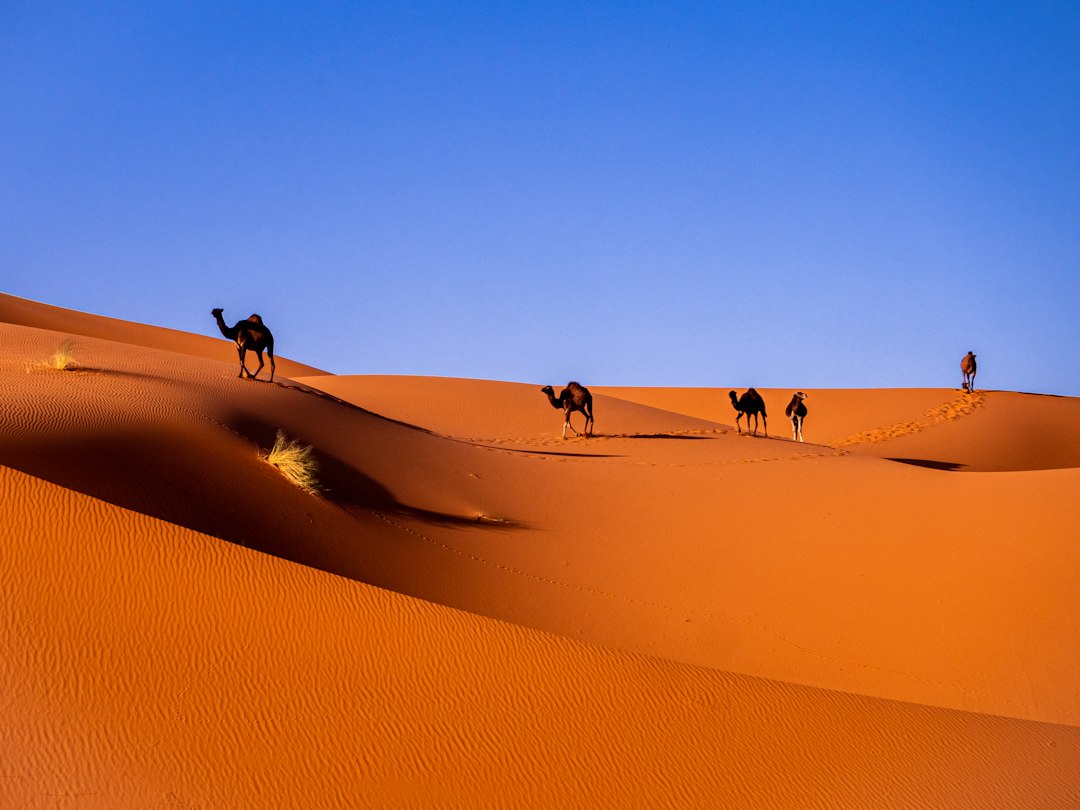
The Sahara is often imagined as an endless field of dunes, but its history is more varied. Rocky plateaus, mountain ranges, dry valleys and scattered oases form a huge region that has connected communities across North and West Africa for centuries.
Caravan routes and exchange
Before modern transport networks, camel caravans helped move goods across difficult stretches of desert. Salt, gold, textiles and other commodities travelled along routes linking settlements and trading centres. These journeys depended on local knowledge: water sources, seasonal conditions, trusted guides and the relationships that made long-distance exchange possible.
Oases as places of connection
Oases were not simply resting points. They supported agriculture, settlement and commerce, and connected travellers with local communities. Their importance reminds us that desert travel has always depended on people and knowledge as much as on endurance.
Visiting the desert thoughtfully
Modern desert excursions vary widely, from short sunset visits to multi-day journeys. Choose responsible local operators, respect communities and avoid leaving waste behind. If travelling in Morocco, consult official visitor information and local guidance for current conditions.
The Sahara’s story is not one of emptiness. It is a story of adaptation, movement and cultural exchange across one of the world’s most distinctive environments.